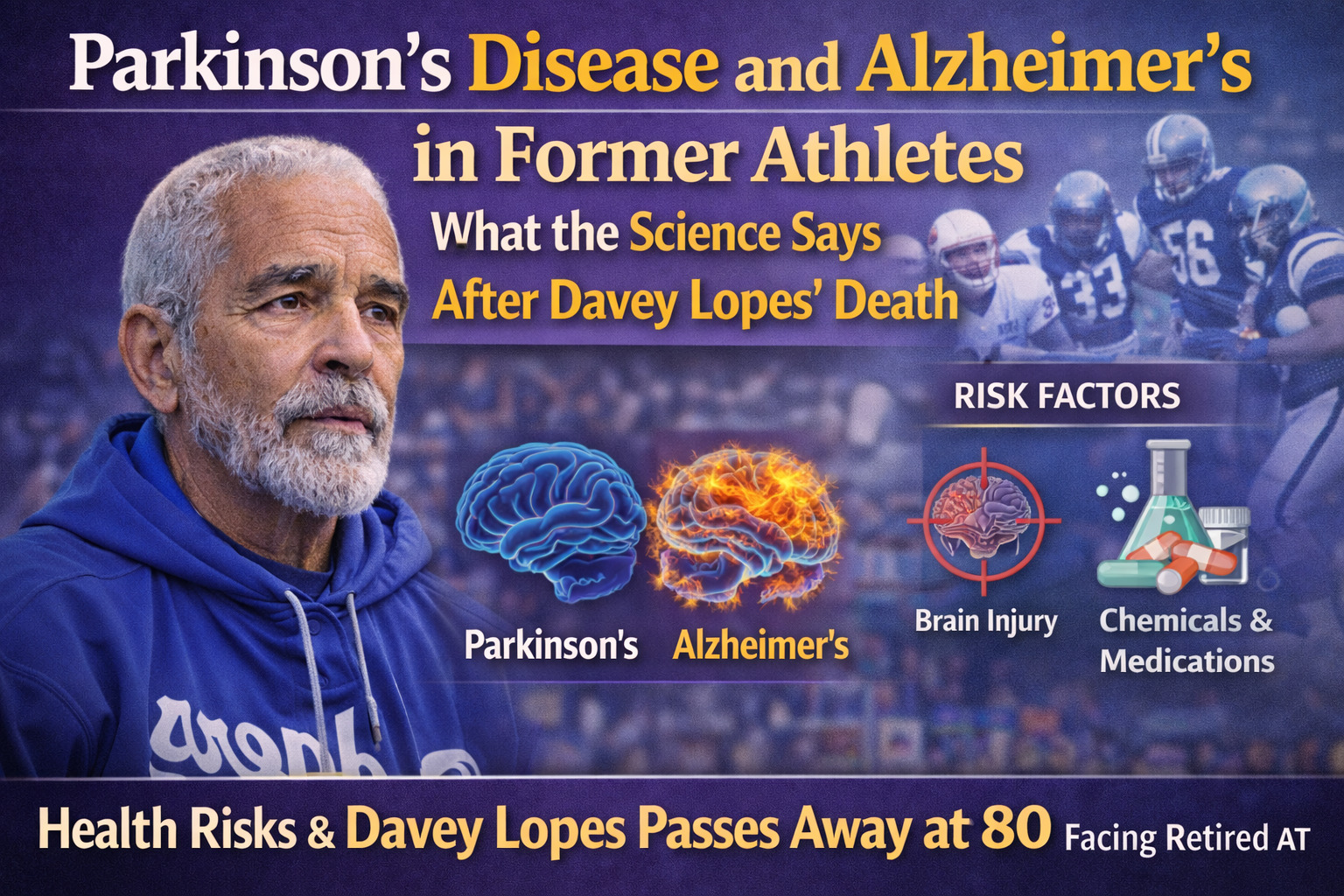
Parkinson’s Disease and Alzheimer’s in Former Athletes: What the Science Says After Davey Lopes’ Death
By Sports Science and Health Writer | Updated: April 2026
→ Davey Lopes Cause of Death: Full Story and Legacy
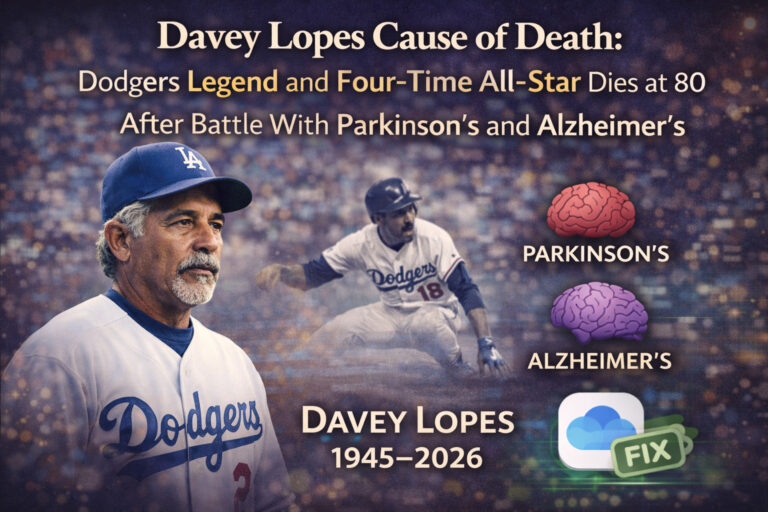
When the Los Angeles Dodgers confirmed that Davey Lopes the four-time All-Star second baseman, stolen base artist, and cornerstone of baseball’s most celebrated infield had died at 80 from complications of both Parkinson’s disease and Alzheimer’s disease, it sparked a question that sports medicine researchers have been wrestling with for years: Are elite athletes at higher risk for neurodegenerative disease than the general population?
The answer, as of 2025–2026, is complicated. And important.
This isn’t about diminishing Davey Lopes’ legacy or turning grief into a science lecture. His death stands on its own as a profound loss for baseball. But his story li, like those of Muhammad Ali, Ken Stabler, Gary Ablett Sr., and hundreds of others, is part of a growing body of evidence that is rewriting how we think about the long-term neurological cost of elite athletic competition.
Here’s what we actually know.
The Athlete Brain: Built for Performance, Vulnerable to Time
Professional athletes train their brains just as intensively as they train their bodies. Reaction time, spatial processing, split-second decision-making,g these aren’t just physical skills. They’re cognitive ones. A second baseman like Davey Lopes wasn’t just running fast; he was reading pitchers, calculating distances, anticipating catcher arm strength, processing defensive alignments, all in real time.
That level of cognitive engagement may actually be protective in early life. Studies have shown that sustained mental challenge,ge particularly under high physical load, can increase what neuroscientists call “cognitive reserve,” the brain’s ability to maintain function despite cellular damage or disease.
But cognitive reserve has limits. And for some athletes, the very conditions that built that reserve repetitive training, physical stress, and in contact sports, repeated head impacts may simultaneously accelerate damage to the underlying neural architecture.
According to the National Institute on Aging (NIA), cognitive reserve is not a buffer that prevents neurodegenerative disease. It may delay the expression of symptoms by months or even years, which is why highly cognitively active individuals sometimes appear fine and then decline sharply when the reserve is finally overwhelmed.
This “cliff effect” is documented in Alzheimer’s research. It may explain why some athletes seem sharp well into their 70s, then deteriorate rapidly.
What Parkinson’s and Alzheimer’s Together Mean
Most people understand Parkinson’s and Alzheimer’s as separate diseases. They are. But they’re not mutually exclusive, and their co-occurrence, sometimes called “dual neurodegenerative disease,” is more common than the public realizes.
A 2022 study published in JAMA Neurology found that among patients diagnosed with Parkinson’s disease, approximately 50–80% eventually develop some form of cognitive impairment, and up to 30% develop full dementia of the Alzheimer’s type. Conversely, Alzheimer’s patients can develop Parkinsonian motor features as the disease progresses.
Why do they overlap? Current research points to several mechanisms:
Protein misfolding pathways, Parkinson’s is associated with abnormal clumping of a protein called alpha-synuclein in Lewy bodies. Alzheimer’s involves the misfolding of amyloid-beta and tau proteins. These proteins don’t operate in isolated silos; they interact, and in some patients, pathological changes in one appear to accelerate pathological changes in the other.
Shared neuroinflammation. Both diseases involve chronic neuroinflammation, the brain’s immune system essentially attacking neural tissue that it can’t properly clear of damaged proteins. Research from the National Institute of Neurological Disorders and Stroke (NINDS) suggests that systemic inflammation (from infections, autoimmune conditions, or environmental exposures) may trigger or accelerate both.
Dopaminergic and cholinergic overlap. Parkinson’s primarily damages dopamine-producing neurons; Alzheimer’s targets acetylcholine-producing cells. When both are compromised simultaneously, the result is a layered dysfunction affecting movement, memory, mood, and cognition.
For former athletes dealing with both diagnoses, daily life becomes extraordinarily difficult. Tremors make mobility dangerous. Cognitive confusion makes medication management impossible without assistance. Balance problems combined with disorientation dramatically increase fall risk, one of the leading causes of fatal complications in elderly patients with both conditions.
Baseball and Brain Health: A Lower-Risk Sport With Unanswered Questions
Baseball occupies an interesting position in the athlete’s brain health discussion. It is not a contact sport in the way football, hockey, rugby, or boxing are. Linemen in the NFL experience hundreds of subconcussive impacts per season, every season, for years. That exposure pattern is definitely linked to CTE (chronic traumatic encephalopathy) by the research of Dr. Ann McKee and colleagues at the Boston University CTE Center.
Baseball players, by contrast, do not routinely experience repetitive head contact. Pitchers, fielders, and baserunners are not, in normal play, absorbing helmet-to-helmet collisions.
But “lower risk” is no risk, and several factors specific to baseball deserve examination:
Hit by a pitch and headfirst sliding. Over a 16-season career like Lopes’, a player absorbs dozens of hit-by-pitch episodes, some of which strike the head or neck. Headfirst sliding Lopes’ signature style creates regular contact between the skull and the ground, as well as potential impact with basemen’s knees and tags. These are not equivalent to NFL impacts, but they accumulate.
In the pre-helmet era, playing conditions, Lopes began his major league career in 1972, a period when batting helmets were less protective than modern designs and earflap helmets were optional. He played the early part of his career with significantly less head protection than a modern player would have.
Heat stress and dehydration. Playing in Southern California and throughout the Southwest, Lopes competed in extreme heat for thousands of hours over his career. Chronic dehydration and heat stress have been linked in animal models to blood-brain barrier disruption and increased amyloid burden, though the human clinical data are still developing.
None of this means baseball caused Davey Lopes’ Parkinson’s or Alzheimer’s. The etiology of both diseases is multifactorial, involves significant genetic components, and remains only partially understood. But these questions are worth asking.
The CTE Research and What It Means for All Athletes
CTE chronic traumatic encephalopathy) It is the neurodegenerative disease most commonly associated with contact sports. It can only be definitively diagnosed post-mortem. Its symptoms during life include memory loss, behavioral changes, depression, impulse control problems, and eventually dementia.
Since the Boston University CTE Center began systematic brain banking of former athletes, the findings have been striking. As of early 2025, the center had examined more than 600 athlete brains, finding CTE in:
- 99% of NFL players studied (though this is a self-selected, symptomatic group; the true population prevalence is almost certainly lower)
- 91% of college football players studied
- 21% of high school football players studied
- Cases have also been identified in soccer players, hockey players, professional wrestlers, and baseball players.
The presence of CTE in baseball players is rarer than in collision sports b, but not absent. The key mechanism isn’t the dramatic, concussive hit, it’s the cumulative effect of hundreds or thousands of smaller impacts that the brain registers,s but the player never “notices” as a concussion.
What researchers are now exploring is the relationship between CTE and other neurodegenerative diseases. Do athletes who develop CTE have a higher likelihood of also developing Alzheimer’s or Parkinson’s? The early evidence suggests yes, particularly for Alzheimer’s. CTE pathology shares features with Alzheimer’s pathology (tau protein tangles), and some researchers believe CTE may accelerate amyloid and tau deposition in susceptible individuals.
This does not mean every former athlete will develop dementia. The vast majority won’t. But it does mean that sports medicine, post-career health monitoring, and neurological screening for former professional athletes are essential and currently underfunded and underprioritized.
Athletes Who Died With Parkinson’s or Alzheimer’s: A Partial History
Davey Lopes joins a roster of elite athletes whose later years were defined by neurodegenerative disease. This is not an exhaustive list, and it’s not meant to suggest a pattern where none exists. But it is a reminder that these diseases cross every sport, position, and era.
Muhammad Ali – Parkinson’s disease, diagnosed in 1984, died on June 20in 16 at age 74. The most famous athlete to live publicly with Parkinson’s, Ali was diagnosed three years after his final fight. His case reignited research into whether repetitive head trauma accelerates Parkinson’s onset, though the connection is not definitively established.
Ken Stabler, Oakland Raiders quarterback, died in 2015. Post-mortem examination by the Boston University CTE Center found Stage 3 CTE (out of 4 stages), described as severe. He also had Alzheimer’s features at autopsy.
Gary Ablett Sr. – Australian rules footballer, diagnosed with both Parkinson’s and a motor neuron disease variant. His case became an important public health moment in Australia around athlete brain health.
Former MLB players – Multiple former major league players have been publicly identified as living with or dying from Alzheimer’s, including former Dodger Tommy Lasorda (who died in 2021 at 93 from cardiac arrest but had experienced cognitive decline), and numerous others across baseball history whose diagnoses were shared quietly by families.
Former NBA and NFL players – The NFL’s settlement of the concussion lawsuit in 2013, valued at over $1 billion, acknowledged the connection between football and neurodegenerative disease without the league admitting liability. Multiple NBA players have been diagnosed with early-onset dementia or Parkinson’s in their 50s and 60s, a cohort that researchers are actively studying.
What Can Be Done? Screening, Research, and Support
For former athletes and their families dealing with Parkinson’s or Alzheimer’s, several resources exist.
The Michael J. Fox Foundation for Parkinson’s Research has invested more than $2 billion in Parkinson’s research since 2000 and offers a clinical trial matching program for patients at michaeljfox.org. The PPMI (Parkinson’s Progression Markers Initiative) is the world’s largest Parkinson’s observational study, tracking biological markers of disease progression.
The Alzheimer’s Association offers a 24/7 helpline (800-272-3900), care planning resources, and a trial matching tool at alz.org. Their research portfolio focuses heavily on early biomarker detection, the ability to identify Alzheimer’s risk through blood tests before symptoms appear.
The Concussion Legacy Foundation, founded in part by Dr. Chris Nowinski and Dr. Robert Cantu, offers resources for former athletes, families, and researchers interested in CTE, long-term brain health, and brain donation programs at concussionfoundation.org.
The NFL Players Association’s neurological care programs and similar programs through other major sports leagues provide post-career neurological screenings for qualifying former players. The quality and accessibility of these programs vary significantly.
What’s still critically needed: routine neurological screening for all former professional athletes, regardless of sport, beginning in their 50s. Given what we know about the delayed expression of neurodegenerative symptoms and the potential benefits of early intervention, particularly with new Alzheimer’s treatments like lecanemab and donanemab, both of which target early-stage amyloid accumulation, catching these diseases early matters enormously.
Caregiving for a Former Athlete With Parkinson’s and Alzheimer’s
This section exists because every article about famous people with these diseases represents thousands of families quietly navigating the same experience without the name recognition.
Caring for someone with both Parkinson’s and Alzheimer’s is one of the most demanding caregiving situations that exists. The motor symptoms of Parkinson’s tremor, rigidity, and falls require physical caregiving and safety modifications. The cognitive symptoms of Alzheimer’s, such as confusion, aggression, sleep disturbance, and inability to recognize family members, require emotional caregiving of extraordinary depth.
A few evidence-based recommendations from the American Geriatrics Society and the Alzheimer’s Association:
For the person living with both conditions, Fall prevention measures are essential, such as grab bars, non-slip surfaces, removing rugs, and adjusting medications that affect balance. Structured daily routines reduce confusion and anxiety. Adequate nutrition (both conditions affect appetite and swallowing in later stages) requires monitoring and sometimes speech therapy involvement.
For the caregiver: Caregiver burnout in dual-diagnosis families is extremely common. The Alzheimer’s Association’s care consultation service is free and available nationally. Adult day programs, respite care, and, when the time comes, memory care facilities specializing in Parkinson ‘s-Alzheimer’s comorbidity are legitimate and compassionate options, not admissions of failure.
Legal and financial planning should happen early, while the person can participate. Durable power of attorney, healthcare proxy designations, and advance directives become essential as both diseases progress.
The Davey Lopes Legacy and What His Death Should Prompt
Davey Lopes was not defined by how he died. He was defined by how he played — with ferocity, intelligence, and an absolute refusal to accept the easy route when a stolen base was available.
But his death, like the deaths of every athlete who struggled with neurodegenerative disease, carries a message that sports organizations, researchers, and fans have an obligation to hear: the body and brain that served these athletes so brilliantly in competition deserve care and investment in the decades that follow.
The sports world celebrates youth, performance, and achievement. It does not celebrate, fund, or prioritize the post-career health of the athletes who made the games worth watching. That has to change.
Not for the famous ones. For all of them.
Frequently Asked Questions
Can playing baseball cause Parkinson’s or Alzheimer’s?
There is no proven direct causal link between playing baseball and developing Parkinson’s or Alzheimer’s disease. Both conditions have complex, multifactorial causes involving genetics, lifestyle, age, and environment. Baseball involves less repetitive head impact than contact sports like football or boxing. However, research into how cumulative physical stress, head impacts, and athletic career factors interact with neurological aging is ongoing.
Did Davey Lopes have CTE?
No public information has confirmed a CTE diagnosis in Davey Lopes. CTE can only be definitively diagnosed post-mortem through brain tissue analysis. His confirmed diagnoses were Parkinson’s disease and Alzheimer’s disease.
What is the difference between CTE and Alzheimer’s?
CTE (chronic traumatic encephalopathy) is specifically associated with repetitive head trauma and involves a distinct pattern of tau protein deposits in the brain. Alzheimer’s disease is the most common form of dementia and involves both amyloid plaques and tau tangles, occurring without a required history of head injury. The two conditions can share overlapping features and may occur together, but they are distinct diagnoses.
At what age do most athletes develop Parkinson’s or Alzheimer’s?
Parkinson’s disease most commonly begins after age 60, with a median age of onset around 70 for the general population. Alzheimer’s typically presents after age 65, though early-onset forms can occur in the 40s and 50s. Athletes who develop these conditions do not appear, on average, to develop them significantly earlier than the general population, though research in specific sport cohorts (particularly contact sports) is evolving.
What are the early warning signs of Parkinson’s disease?
Early signs of Parkinson’s include a slight tremor (often in a hand or finger at rest), changes in handwriting (smaller, cramped letters), loss of smell, difficulty sleeping, stiffness, and a masked facial expression. If you notice these signs in yourself or a loved one, a consultation with a neurologist is appropriate. The Parkinson’s Foundation offers a self-assessment tool at parkinson.org.
What resources exist for former athletes with brain health concerns?
The Concussion Legacy Foundation, Michael J. Fox Foundation, Alzheimer’s Association, and the sports leagues’ union health programs all offer support. Many professional sports leagues offer post-career medical screening programs, though eligibility and quality vary. Consulting a sports medicine physician or neurologist familiar with athlete health is the recommended starting point.
Related articles:
- Davey Lopes Cause of Death: Dodgers Legend Dies at 80 — Full Legacy and Story ← Main pillar page
- Muhammad Ali and Parkinson’s Disease: A 32-Year Battle
- CTE Research in 2025: What Athletes and Families Need to Know
- The Longest-Tenured Infields in MLB History
Sources: National Institute on Aging (nia.nih.gov), Parkinson’s Foundation (parkinson.org), Alzheimer’s Association (alz.org), Michael J. Fox Foundation (michaeljfox.org), Boston University CTE Center (bu.edu/cte), Concussion Legacy Foundation (concussionfoundation.org), JAMA Neurology (2022 Parkinson’s/dementia study), The Lancet Neurology (2024 dementia risk factors), npj Parkinson’s Disease (2023 global prevalence), National Institute of Neurological Disorders and Stroke (ninds.nih.gov), American Geriatrics Society (americangeriatrics.org).