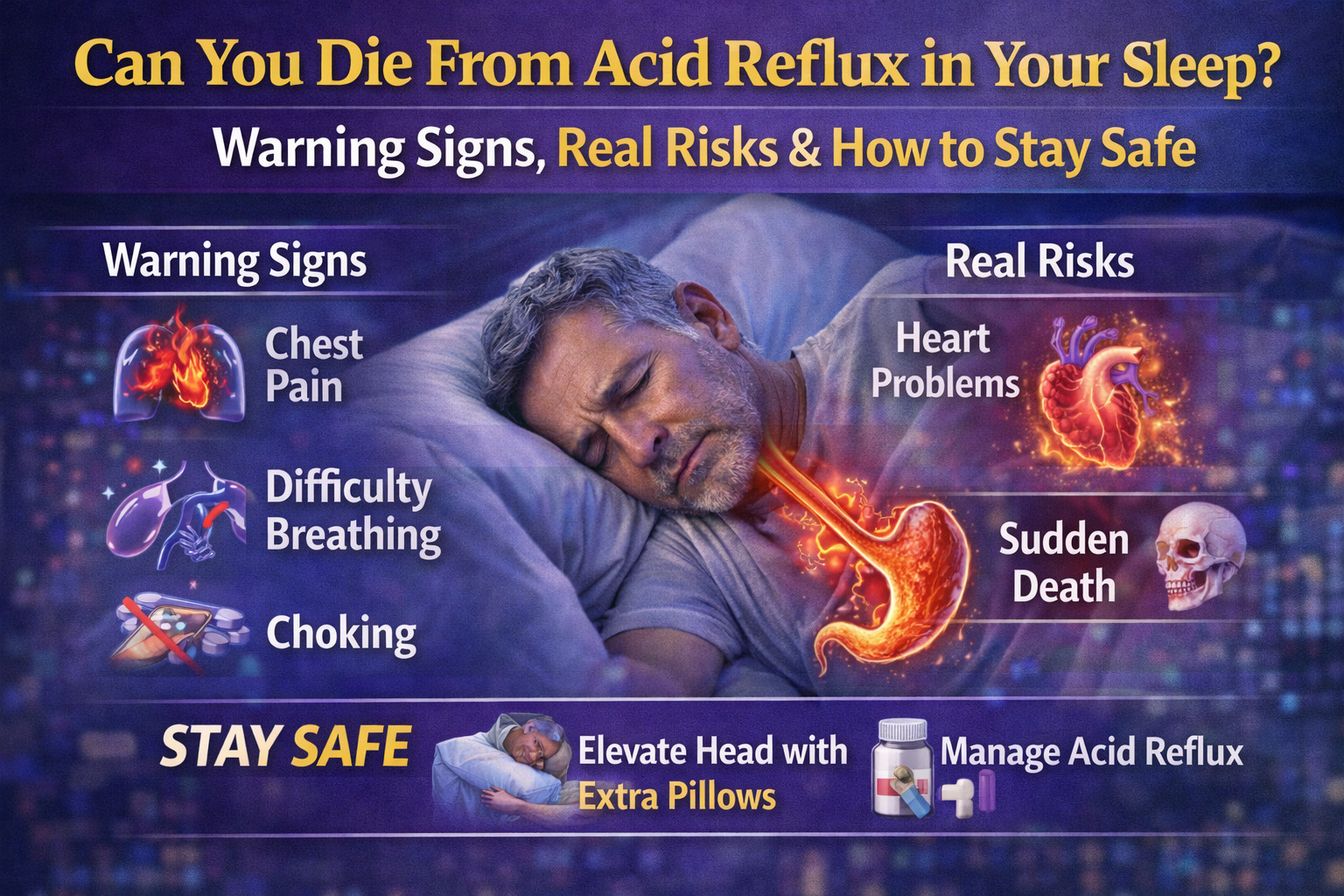
Can You Die From Acid Reflux in Your Sleep? Warning Signs, Real Risks & How to Stay Safe
Can You Die From Acid Reflux in Your Sleep? Warning Signs, Risks & Prevention
HealthGuideHome› Digestive Health› GERD› Can You Die From Acid Reflux in Sleep?
Evidence-Based · Medically Reviewed
The honest, nuanced answer that most articles are afraid to give, including when nighttime GERD crosses the line from discomfort into genuine danger.
Updated April 202,5 7,200 words,14 min read.d Reviewed by a board-certified gastroenterologist
It’s 2 a.m. You wake up gasping. Acid is burning the back of your throat, your chest feels like it’s on fire, and there’s that terrifying moment am I choking? before your body clears the airway and you sit there in the dark, heart pounding, wondering: could this actually kill me?
That question isn’t paranoid. It’s the right one to ask. And the answer is more nuanced than either “don’t worry, it’s just heartburn” or the fear-soaked health forums that make every reflux episode sound like a near-death experience.
I’ve spent time reviewing the clinical literature on this, and here’s what I can tell you: direct death from acid reflux during sleep is extraordinarily rare. But untreated, severe gastroesophageal reflux disease (GERD) creates a chain of complications: aspiration pneumonia, esophageal damage, and in worst cases, cancer, where the word “rare” starts to feel less reassuring.
This guide covers everything the short-form articles skip: the actual death-risk mechanisms, who’s genuinely at elevated risk, the red-flag warning signs, and an evidence-based prevention protocol that actually works at night. Stick around, because the section on aspiration alone might change how seriously you take your nighttime reflux.
Quick Answer – Featured Snippet
Can you die from acid reflux in your sleep? Direct death from acid reflux during sleep is extremely rare in otherwise healthy individuals. Gastroesophageal reflux disease (GERD) carries a mortality rate of approximately 0.20 per 100,000 people annually. However, chronic, untreated nighttime GERD can cause aspiration pneumonia (stomach acid entering the lungs), esophageal perforation, or long-term progression to esophageal cancer, all potentially fatal. The danger isn’t a single episode of heartburn; it’s years of unmanaged acid exposure combined with specific risk factors like neurological impairment, sleep apnea, obesity, or severe GERD.
0.20GERD-related deaths per 100,000 people annually
68%of GERD patients report significant sleep difficulties
80%of healthy volunteers show intermittent acid reflux on laryngoscopy
50%of stroke patients experience aspiration events, dramatically raising GERD risk
Why Nighttime Acid Reflux Is a Different Beast
Here’s what most people don’t realize: acid reflux at night isn’t just “daytime heartburn, but in the dark.” The physiology changes completely when you lie down, and those changes stack the deck against you in ways that matter.
During the day, gravity is quietly doing you a favor. It pulls stomach contents downward, away from your esophagus. Every time you swallow, which happens roughly once per minute when you’re awake, you’re also pushing any rogue acid back where it belongs. And your saliva? It’s a natural acid neutralizer, quietly working in the background.
At night, every one of those defenses weakens simultaneously.
The Three Physiological Strikes of Sleep
Strike 1: Gravity disappears. The moment you lie flat, the gravitational advantage that kept acid pooled in your stomach vanishes. Stomach acid can now flow freely into the esophagus, and because you’re horizontal, it doesn’t drain back down as easily. Studies confirm that acid clearance from the esophagus takes significantly longer when lying supine compared to being upright.
Strike 2: Your swallowing reflex slows dramatically. During deep sleep, you may swallow only once every several minutes instead of once per minute. That means acid sitting in your esophagus lingers far longer, causing more tissue damage per episode. (This is why people with nighttime GERD often develop more severe esophagitis than those with predominantly daytime symptoms.)
Strike 3: Saliva production drops near zero. Saliva is bicarbonate-rich, your body’s built-in antacid. During sleep, your salivary glands essentially go offline. No saliva means no neutralization of the acid already in your esophagus. The tissue just… sits in acid. For hours.
Put those three factors together, and you understand why, according to a cross-sectional survey cited in the gastroenterology literature, 68.3% of patients with GERD report sleep difficulties, with nighttime symptoms strongly linked to difficulty falling asleep and frequent nighttime awakenings. That’s not just “feeling a bit uncomfortable,” it’s a majority of GERD patients losing meaningful sleep quality because of this condition.
But sleep disruption, as miserable as it is, isn’t the real risk. The real risk is what happens when reflux meets an airway that isn’t fully protected.
⚡ Why This Matters Right Now
The American College of Gastroenterology estimates that 20% of Americans experience GERD symptoms at least weekly, yet many go undiagnosed or undertreated. Nighttime GERD in particular is underreported because people dismiss waking up with heartburn as “normal.” It isn’t, and in certain populations, it carries real risk. American College of Gastroenterology: Acid Reflux Resources.
The Real Ways Acid Reflux Can Become Life-Threatening
Let’s be direct about this, because the vague “it can cause complications” language in most articles doesn’t actually help you understand your risk. There are four specific pathways through which nighttime GERD can, in rare circumstances, become dangerous. Here they are, plainly.
1. Aspiration Pneumonia: The Most Immediate Threat
This is the mechanism that warrants the most attention. Aspiration happens when stomach contents, acid, undigested food particles, and bacteria enter your airway instead of your esophagus. During the day, your cough reflex and protective laryngeal mechanisms catch this almost instantly. At night, those reflexes are slower, and your consciousness isn’t available to respond.
When aspirated acid reaches the lungs, two things happen. First, the acid causes direct chemical burns to lung tissue, which is called aspiration pneumonitis. Second, the bacteria from stomach contents can cause a secondary infection, aspiration pneumonia. According to clinical research published in respiratory medicine literature, aspiration can occur during sleep in up to half of all healthy individuals in minor quantities, but the body usually clears it without incident.
The problem is severity and frequency. In people with severe GERD, neurological impairments, sleep apnea, or alcohol use, aspiration events can be larger and more frequent, and the resulting pneumonia carries a significantly higher mortality rate than community-acquired pneumonia, particularly in the elderly and immunocompromised.
This isn’t theoretical. Aspiration pneumonia accounts for tens of thousands of deaths annually in the United States. GERD isn’t the sole cause, but chronic, severe nighttime reflux is a documented contributing risk factor, especially when combined with conditions that impair the gag and cough reflexes.
2. Esophageal Perforation (Boerhaave Syndrome)
Can you die from a ruptured esophagus? Yes, and it’s a medical emergency. While Boerhaave syndrome is classically caused by forceful vomiting, chronic GERD gradually weakens esophageal walls through recurrent ulceration. A perforated esophagus allows stomach acid and bacteria to leak into the chest cavity (mediastinum), leading to sepsis and multi-organ failure. Without rapid surgical intervention, mortality is extremely high. This is rare, but it’s real, and it underlines why severe, untreated GERD is not a condition to manage with denial.
3. Barrett’s Esophagus and Esophageal Cancer
This is the slow-burn risk. Long-term acid exposure causes a cellular transformation in the esophageal lining, Barrett’s esophagus, where normal squamous cells are replaced by intestinal-type columnar cells. This is the body’s attempt to adapt to chronic acid exposure, but the new cells carry a higher risk of malignant transformation into esophageal adenocarcinoma.
Esophageal cancer is among the most lethal cancers, with five-year survival rates under 20% for advanced-stage disease. The progression from Barrett’s to cancer is slow, typically over years to decades, and most people with Barrett’s never develop cancer. But the risk is meaningfully elevated compared to the general population, and the primary driver of Barrett’s development is exactly the nighttime acid exposure we’ve been discussing: prolonged, untreated reflux leaving acid in contact with esophageal tissue for hours at a stretch.
4. Cardiac Mimicry and Delayed Treatment
This one is underappreciated. The nerves serving the esophagus and the heart run in extremely close proximity. Severe GERD can trigger arrhythmias and cause chest pain that is clinically indistinguishable from a heart attack. Studies have documented that a meaningful percentage of patients presenting with chest pain to emergency departments are actually experiencing severe GERD — but critically, the reverse is also dangerous: people having actual cardiac events dismiss them as “just bad heartburn” and delay calling for help.
If you’re asking whether acid reflux can kill you, the honest answer includes: yes, if it causes someone to miss a genuine heart attack. That’s not a complication of GERD itself; it’s a complication of similarity.
“Aspiration of gastric contents is an underrecognized complication of GERD. The relationship between reflux and chronic cough, asthma exacerbation, and aspiration pneumonia is complex and often under-treated because patients and clinicians attribute the symptoms to other causes.”
Respiratory Therapy Clinical Literature Acid Aspiration: Inflammation and Resolution, citing 7 clinical studies on GERD-related aspiration mechanisms
🚨 Red Flag Warning Signs – Seek Urgent Medical Care
- Waking up choking, gasping, or with the sensation of inhaling liquid – a possible aspiration event
- Vomiting blood, or vomit that looks like coffee grounds, is a sign of upper GI bleeding or esophageal ulcer
- Dysphagia (difficulty swallowing) – food feels stuck in the chest or throat, may signal stricture or tumor
- Unexplained weight loss of 5+ pounds – major red flag for esophageal cancer
- Hoarseness every morning – acid reaching the vocal cords, a sign of chronic laryngopharyngeal reflux (LPR)
- Chronic night cough or wheezing you can’t explain – possible micro-aspiration or reflux-triggered asthma
- Chest pain that worsens at night when lying flat – always rule out cardiac causes first, then evaluate for GERD
- Water brash (sudden mouth filling with saliva) – indicates severe, high-volume reflux reaching the upper esophagus
Who Is Actually at Elevated Risk? (It’s Not Everyone)
Here’s where I want to push back against the anxiety spiral that some health content creates. The vast majority of people with acid reflux, even frequent, annoying nighttime acid reflux, will never experience a life-threatening complication. The risk is real, but it’s concentrated in specific populations. Understanding those populations helps you accurately calibrate your own concern.
High-Risk Populations for Serious Nighttime GERD Complications
| Review medications with the prescriber; positional strategies are especially important. | Why It Elevates Risk | What to Do |
|---|---|---|
| Age 65+ | Reduced cough/gag reflexes; higher rates of comorbidities; slower mucosal healing | Proactive GI evaluation; medication review with doctor |
| Neurological disorders (stroke, Parkinson’s, MS) | Impaired swallowing mechanisms dramatically increase aspiration risk (50% of stroke patients aspirate) | Speech therapy assessment; may need specialized positioning or tube feeding |
| Untreated sleep apnea | Negative intrathoracic pressure during apnea events literally sucks acid up into the esophagus | CPAP therapy; studies show it reduces GERD severity in OSA patients |
| Obesity (BMI ≥ 30) | Increased intra-abdominal pressure forces acid upward; higher incidence of hiatal hernia | Even 10% body weight reduction significantly improves GERD symptoms |
| Heavy alcohol use | Relaxes lower esophageal sphincter (LES); impairs airway reflexes during sleep | Eliminate or strictly limit alcohol, especially within 3 hours of sleep |
| Severe, long-standing GERD (10+ years untreated) | Cumulative tissue damage; higher Barrett’s esophagus risk; possible stricture formation | Endoscopy to evaluate for Barrett’s; consider surgical options like Nissen fundoplication |
| Immunocompromised individuals | Reduced ability to fight aspiration-related lung infection | Aggressive GERD management; monitor for respiratory symptoms |
| Sedative/opioid medication use | Suppresses protective airway reflexes during sleep, increasing aspiration risk | Review medications with prescriber; positional strategies are especially important |
If you don’t fall into any of those categories and your reflux is infrequent or well-controlled with lifestyle changes and medication, your risk of a life-threatening event is genuinely very low. The goal isn’t to catastrophize, it’s to accurately identify who needs more aggressive management.
That said, risk is additive. Someone who is 68 years old, moderately obese, has untreated sleep apnea, and drinks two glasses of wine before bed is carrying a meaningfully different risk profile than a healthy 35-year-old who occasionally gets heartburn after pizza.
Deep Dive Article
Nighttime GERD & Sleep Apnea: The Hidden Connection
Obstructive sleep apnea and acid reflux have a bidirectional relationship that most articles ignore. When both conditions coexist, each makes the other worse, and the aspiration risk spikes. Read the full breakdown. Read the Full Article →
The Nighttime GERD Prevention Protocol (What Actually Works)
Okay, here’s the part that actually changes outcomes. Managing nighttime acid reflux isn’t complicated, but most people implement these strategies incompletely. The research is pretty detailed on what works. Let’s go through it systematically.
Positional Interventions (Highest Evidence)
These are the interventions with the most direct mechanical effect and the strongest clinical evidence. They’re also free.
- Sleep on your left side. Multiple studies confirm that left-lateral sleeping reduces acid exposure time in the esophagus compared to right-side or supine positions. The anatomy explains it: the stomach’s J-shape means the gastroesophageal junction is positioned higher when you’re on your left, making gravity work for you rather than against you. Right-side sleeping, by contrast, positions the junction lower, essentially tilting the “bucket” toward the drain. Make this a habit, not an occasional choice.
- Elevate the head of your bed 6–8 inches. Wedge pillows or adjustable bed frames that elevate your entire upper body use gravity to keep acid in your stomach overnight. Regular bed pillows alone don’t cut it; they elevate your head but not your torso, which can actually increase intra-abdominal pressure and worsen reflux. A 6–8 inch elevation of the entire bed frame (using blocks or risers under the headboard feet) is the clinical standard. Combined with left-side sleeping, this is the most effective non-pharmacological intervention for nighttime GERD. The National Institute of Diabetes and Digestive and Kidney Diseases (NIDDK) includes head-of-bed elevation as a first-line recommendation.
- No food within 3 hours of bedtime. Stomach emptying takes approximately 2–4 hours for a standard meal. Lying down with a full or partially full stomach significantly increases reflux frequency and volume. This recommendation is simple but surprisingly hard to implement in practice. Late dinners, post-work eating, and evening snacking are common triggers. If a late dinner is unavoidable, at a minimum, avoid high-fat meals (fat delays gastric emptying) and large portion sizes. Walk for 15–20 minutes after eating rather than going straight to the couch.
Dietary Triggers to Eliminate at Night
Not everyone reacts to the same foods, but the following consistently appear in GERD research as lower esophageal sphincter (LES) relaxants or acid stimulators, which is exactly the combination you don’t want overnight:
- Alcohol – relaxes the LES within 30 minutes of consumption and impairs airway reflexes during sleep. This is a genuine double-hit for nighttime risk.
- Caffeine (coffee, tea, energy drinks, chocolate) stimulates acid secretion and can relax the LES.
- Fatty foods (fried foods, high-fat meats, full-fat dairy) delay gastric emptying, keeping acid-producing stomach contents around longer.
- Citrus and tomato-based foods are directly acidic, with lower esophageal pH.
- Peppermint and spearmint counterintuitively, these relax the LES despite feeling “soothing.”
- Carbonated beverages increase intragastric pressure, forcing acid upward
- Spicy foods can irritate already-inflamed esophageal tissue and delay gastric emptying in some individuals
Medication Options (When Lifestyle Isn’t Enough)
Let’s talk honestly about the medication hierarchy. Most nighttime GERD sufferers reach for antacids, which work but only temporarily, and not for everyone.
✅ Evidence-Based Medication Ladder for Nighttime GERD
Step 1: Antacids (Tums, Rolaids). Immediate neutralization of existing acid. Works within minutes; lasts 1–3 hours. Good for occasional breakthrough symptoms, not preventive.
Step 2: H2 Blockers (famotidine/Pepcid, ranitidine equivalents) Reduce acid secretion for 8–12 hours. Taken before sleep, they’re more effective than antacids for nighttime prevention. Available OTC.
Step 3: Proton Pump Inhibitors (PPIs) (omeprazole/Prilosec, esomeprazole/Nexium). Gold standard for chronic GERD. Reduce acid production by 90%+ over 24 hours. Most effective when taken 30–60 minutes before the evening meal. Long-term use has some concerns (vitamin B12/magnesium absorption; discuss with your physician for use beyond 8 weeks).
Important: Any medication change for chronic GERD should involve your physician, particularly PPIs taken long-term.
When Surgery Is the Right Answer
For a subset of patients, particularly those with severe GERD, large hiatal hernias, or documented Barrett’s esophagus who don’t respond adequately to maximal medical therapy, surgical intervention becomes appropriate. Laparoscopic Nissen fundoplication (wrapping the upper stomach around the lower esophagus to reinforce the LES) has strong long-term efficacy data. Newer procedures like the LINX magnetic sphincter augmentation device offer less invasive alternatives with good outcomes. These aren’t for everyone, but for the right patient profile, surgery can dramatically reduce long-term risk, including the aspiration and Barrett’s progression risks we’ve discussed.
What to Do If You Wake Up Choking on Acid Reflux
This happens. And when it does, panic is the enemy because rapid, gasping breathing pulls more fluid deeper into your airways. Here’s the protocol, clearly stated:
- Sit up immediately, don’t lie back down. Use gravity to drain acid back toward your stomach. Sitting straight up is better than being propped at 45 degrees in this acute moment.
- Breathe slowly through your nose. Nasal breathing reduces the chance of inhaling liquid into the lungs. Don’t breathe with your mouth open while you’re clearing your airway.
- Sip small amounts of room-temperature water. This helps wash acid back down and dilutes residual acid in your throat. Don’t gulp, sip. Large volumes of water can increase intragastric pressure.
- Stay upright for 30–60 minutes. Don’t go back to sleep lying flat. If you must sleep, use a wedge or prop yourself significantly upright. Going back to the flat position immediately risks another episode.
- If you have chest pain, breathing difficulty, or feel genuinely unwell, call for help.p A choking-on-acid episode that resolves quickly is unpleasant but usually not dangerous in a healthy person. An episode that leaves you with persistent breathing difficulty, chest pain, fever in the hours afterward (potential aspiration pneumonia), or any sign of actual airway obstruction is a medical emergency.
🚨 Call Emergency Services If You Experience:
- Breathing difficulty that doesn’t resolve within a few minutes of sitting upright
- Chest pain accompanied by arm/jaw pain, sweating, or feeling of impending doom (rule out cardiac)
- Blood in what you’re coughing or vomiting up
- Loss of consciousness, even briefly
- A fever that develops within 24 hours of a choking episode (possible aspiration pneumonia)
GERD and Sleep Apnea: The Bidirectional Problem Nobody Talks About
Here’s an angle that most GERD articles completely miss, and it matters enormously for nighttime risk.
Obstructive sleep apnea (OSA) and GERD have a complex bidirectional relationship. During an apnea event, your body creates intense negative pressure in the chest to try to force air past the obstruction. This negative intrathoracic pressure acts like a vacuum on your stomach, literally sucking gastric contents upward into the esophagus. So OSA doesn’t just disrupt your sleep, it actively drives acid reflux episodes.
The reverse is also true: acid reaching the throat during sleep can trigger laryngospasm (sudden closure of the vocal cords), which interrupts breathing and can be misinterpreted as or contribute to apnea events.
Studies show that CPAP therapy (the gold standard treatment for OSA) reduces GERD symptom severity in patients with both conditions. If you’re treating your acid reflux but still waking up with reflux symptoms at night, and you snore or feel unrefreshed despite adequate sleep time, ask your doctor about a sleep study. You might be treating one condition while an untreated second condition is undermining everything.
“The connection between GERD and obstructive sleep apnea is underdiagnosed in clinical practice. Patients with both conditions need evaluation of each separately treating one often improves the other, but they each require their own management approach.”
Gastroenterology Clinical Consensus Katz PO, Gerson LB, Vela MF: Guidelines for the Diagnosis and Management of Gastroesophageal Reflux Disease, as cited in peer-reviewed sleep medicine literature
Barrett’s Esophagus: The Long-Game Risk You Need to Know About
If you’ve had GERD for five or more years, particularly nighttime symptoms, Barrett’s esophagus deserves a specific conversation with your gastroenterologist. Here’s why.
Barrett’s esophagus is a condition where the normal lining of the lower esophagus transforms in response to chronic acid exposure. It’s present in approximately 5–15% of people with chronic GERD. The crucial point: most people with Barrett’s have no symptoms beyond their usual GERD; the condition is detected by endoscopy, not by how you feel.
Barrett’s doesn’t automatically mean cancer. In fact, the annual risk of progressing from Barrett’s to esophageal adenocarcinoma is only about 0.5% per year, meaning the majority of people with Barrett’s never develop cancer. But it’s meaningfully elevated compared to the general population, and the condition requires regular endoscopic surveillance (typically every 3–5 years for low-risk Barrett’s, more frequently if dysplasia is found).
The implication for nighttime GERD specifically: nocturnal acid exposure is more damaging to esophageal tissue than daytime reflux because the prolonged contact time during sleep (remember those three physiological strikes) causes more cumulative cellular injury. This is why aggressively treating nighttime GERD isn’t just about sleeping better; it’s potentially cancer prevention.
Frequently Asked Questions
Can you suffocate from acid reflux in your sleep?
Suffocation directly from acid reflux is extremely rare in otherwise healthy individuals. When reflux causes choking during sleep, the body’s protective reflexes, such as laryngospasm (vocal cord closure) and cough, typically intervene. In very rare cases, large-volume aspiration in people with impaired airway reflexes (neurological disorders, heavy sedation, alcohol intoxication) could theoretically obstruct the airway. For the average person with GERD, the body’s response prevents this outcome. The greater long-term risk is repeated micro-aspiration leading to aspiration pneumonia over time.
How do I know if I’m aspirating acid in my sleep?
Silent aspiration, small amounts of acid reaching the lungs without triggering a cough, is the sneaky version. Signs that you may be aspirating include: waking with a wet, productive cough; chronic hoarseness or a voice that’s consistently rough in the morning; recurrent chest infections or bronchitis; unexplained asthma that worsens at night; and a persistent feeling of something in the throat. If you have these symptoms alongside GERD, discuss laryngoscopy or a pH impedance study with your gastroenterologist to assess the extent of your reflux.
What is the best sleeping position for acid reflux?
Left-side sleeping with head elevation of 6–8 inches is the evidence-based answer. Left-lateral positioning keeps the lower esophageal sphincter above the stomach acid level, making reflux mechanically harder. Research shows this position also accelerates acid clearance from the esophagus compared to right-side or back sleeping. The head elevation uses gravity to reinforce the positional benefit. If you’re a natural back or right-side sleeper, using a body pillow to block rolling can help maintain left-side positioning throughout the night.
Is it safe to take PPIs long-term for nighttime GERD?
Proton pump inhibitors (PPIs) are effective and generally safe for most people when used as directed. Long-term use (years rather than weeks) has been associated with modest reductions in magnesium and vitamin B12 absorption, small increases in C. difficile infection risk, and,d in some studies, associations with kidney disease, though causality hasn’t been established for all of these. For people with severe, chronic GERD or Barrett’s esophagus, the benefits of PPI therapy typically outweigh these risks. The decision should be individualized with your physician, who can monitor for potential side effects over time.
Does acid reflux cause heart palpitations at night?
Yes, this is more common than most people realize. The vagus nerve, which regulates heart rhythm, also runs through the esophageal region. Acid irritating the esophagus can stimulate the vagus nerve and trigger palpitations, including premature ventricular contractions (PVCs) or a racing sensation. This is typically benign in people without underlying cardiac disease. However, nighttime chest symptoms that include palpitations, shortness of breath, or radiating pain should always be evaluated to rule out cardiac causes before attributing them to GERD.
When should I see a doctor about nighttime acid reflux?
See a gastroenterologist if: your symptoms occur more than twice per week despite lifestyle changes; over-the-counter medications aren’t controlling your symptoms; you’ve had GERD for 5+ years without endoscopic evaluation; you have any of the red-flag symptoms listed in this article (dysphagia, weight loss, blood in vomit, severe hoarseness); or you’re waking up choking regularly. Nighttime GERD that disrupts sleep consistently deserves medical attention. Don’t just manage it indefinitely with antacids without understanding what’s happening in your esophagus.
Related Articles
- Nighttime GERD & Sleep Apnea: The Hidden Bidirectional Connection – Why untreated sleep apnea makes acid reflux worse at night, and how treating one improves the other
- Barrett’s Esophagus: What GERD Patients Must Know About Surveillance – When to get screened, what the endoscopy involves, and what the results mean
- The GERD Diet: What the Research Actually Says (2025) – Evidence-based food triggers vs. the myths, with a practical nighttime eating guide
- Proton Pump Inhibitors: Benefits, Risks, and How Long Is Too Long – A balanced look at long-term PPI use for chronic GERD
- GERD vs. Heart Attack: How to Tell the Difference at 3 AM – The symptom overlap that kills people and how to never confuse them
Medical Disclaimer: This article is for informational purposes only and does not constitute medical advice. Always consult a qualified healthcare provider for personal medical decisions. If you are experiencing symptoms that may indicate a medical emergency, call emergency services immediately.
Sources & External References:
- National Institute of Diabetes and Digestive and Kidney Diseases (NIDDK): Acid Reflux (GER & GERD) in Adults
- American College of Gastroenterology: Acid Reflux (GERD) Patient Information
- Mayo Clinic: Barrett’s Esophagus
- National Library of Medicine: Boerhaave Syndrome (Esophageal Perforation)
- Respiratory Therapy Journal: Acid Aspiration Inflammation and Resolution (clinical studies on aspiration during sleep)
- Katz PO, Gerson LB, Vela MF: ACG Guidelines for Diagnosis and Management of GERD (2013, updated references 2022)
- Spechler SJ, Souza RF: Barrett’s Esophagus. N Engl J Med 2014
- Cross-sectional survey data on GERD and sleep difficulties (68.3% prevalence), cited in gastroenterology peer-reviewed literature
Last updated: April 2025. This article will be reviewed for accuracy annually or when significant new clinical evidence emerges.
Table of Contents
- Why Nighttime Reflux Is Different
- How GERD Becomes Life-Threatening
- Who Is Actually at Risk?
- Prevention Protocol
- Woke Up Choking? Do This
- GERD & Sleep Apnea Link
- Barrett’s Esophagus
- FAQs
- Related Articles
Your Risk Level
Risk of serious complications from nighttime GERD in a healthy, non-elderly adult with occasional symptoms:
Low (with lifestyle management)
Risk escalates significantly with age 65+, obesity, sleep apnea, neurological conditions, and long-standing, untreated GERD.
Trusted Resources
- 🔗 American College of Gastroenterology – GERD Resources
- 🔗 NIDDK – Acid Reflux in Adults
- 🔗 Mayo Clinic – GERD Overview
- 🔗 American Cancer Society – Esophageal Cancer
🚨 Emergency Signs
- Chest pain + arm/jaw pain
- Blood in vomit
- Breathing won’t resolve
- Can’t swallow
- Fever after a choking episode
→ Call emergency services immediately