Electrolyte Drink Mix Without Sugar Side Effects: What Nobody’s Telling You (But Should)
Introduction
You’ve made the smart swap. You ditched the sugar-laden sports drink, picked up a “clean” electrolyte mix, and started drinking it daily. Good hydration, zero guilt right? Not so fast.
Here’s the thing: most articles covering electrolyte drink mixes without sugar stop at the obvious. They list the ingredients, mention that stevia is natural, and call it a day. But there’s a messier, more nuanced truth underneath one that affects your gut, your blood pressure, your kidneys, and honestly, whether these products are even working the way you think they are. As someone who has spent years exploring sports nutrition science, I want to give you the honest picture, including the parts most brands don’t put in their FAQ.
What is an electrolyte drink mix without sugar?
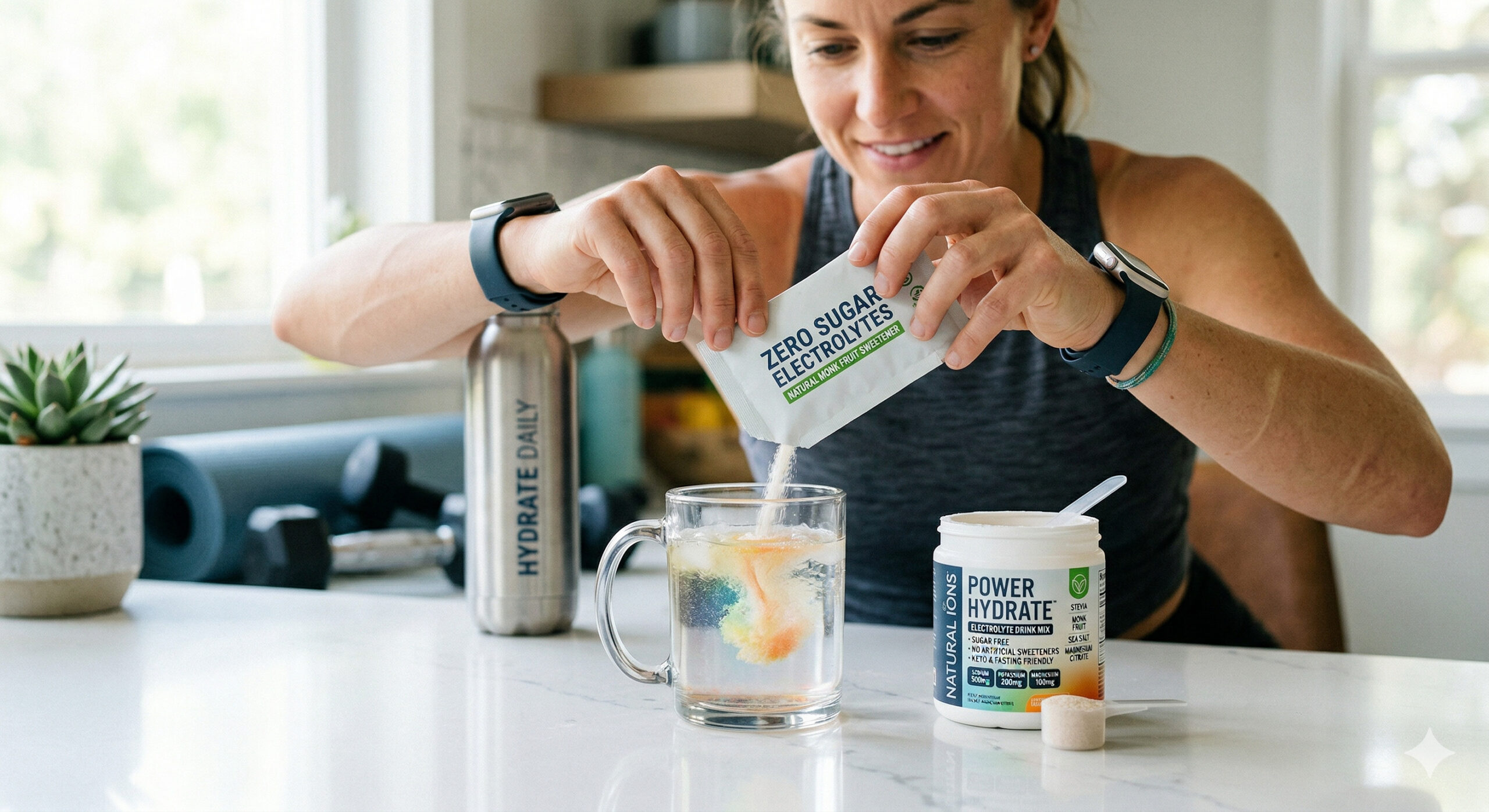
It’s a powdered supplement dissolved in water that delivers essential minerals primarily sodium, potassium, magnesium, and calcium without adding table sugar or refined carbohydrates. These mixes achieve sweetness (when they do) through alternative sweeteners such as stevia, monk fruit, erythritol, or sucralose. They’re designed for hydration support, especially during physical activity, illness recovery, or low-carb dietary patterns. As of 2025, the category has exploded: brands like LMNT, Liquid I.V. Sugar-Free, Nuun, and Redmond Re-Lyte command strong followings among keto dieters, endurance athletes, and health-conscious consumers alike.
The Hidden Problem With “Sugar-Free” Isn’t What You Think
Let’s get something out of the way: removing sugar from an electrolyte drink doesn’t make it automatically side-effect-free. It just trades one set of potential issues for another. And that’s where 90% of content on this topic goes completely silent.
The sugar you removed from your electrolyte drink was doing something useful. Back in the 1960s, Dr. Robert Crane identified what’s now called glucose “cotransport” the mechanism by which a small amount of sugar activates the small intestine’s absorption capabilities. This discovery became the foundation of modern hydration science, contributing to Oral Rehydration Therapy that even revolutionized cholera treatment. The upshot for you: sugar isn’t purely the villain. Electrolyte drinks without sugars don’t have this additive effect of sodium absorption through specialized channels in the gut, meaning they may not work as efficiently as sugar-containing versions during intense exercise.
So what does a sugar-free electrolyte drink use instead? That’s where it gets interesting and occasionally problematic.
The sweetener substitution problem.
Most sugar-free mixes fall into one of three camps: products sweetened with natural alternatives like stevia or monk fruit, products using sugar alcohols like erythritol or xylitol, and products that are entirely unsweetened (just minerals, salts, and possibly citric acid for flavor). Each camp carries its own quirks.
According to the Mayo Clinic, sugar alcohols, stevia, and luo han guo (monk fruit) can all cause bloating, gas, and diarrhea and the amount that triggers these symptoms varies considerably from person to person. If you’ve ever downed a packet of your favorite electrolyte mix before a morning run and then spent that run… not running, you know exactly what this feels like. (Trust me, I’ve been there. It’s not fun.)
The sugar alcohol situation is particularly worth understanding. Xylitol, for example, is incompletely absorbed in the gut, with the majority being fermented by bacteria in the colon and the potential adverse events from this fermentation include abdominal discomfort, bloating, and diarrhea through an osmotic effect. Erythritol is generally better tolerated, but individual responses vary wildly. If your electrolyte mix lists “sugar alcohol” on the label, that’s worth paying attention to before you chug it pre-workout.
What about stevia?
It’s widely marketed as the gentlest natural sweetener, and for many people, it is. But the research isn’t entirely settled. A 2024 peer-reviewed study in Cureus noted that artificial and low-calorie sweeteners, including stevia, impact gut microbiota in ways that can manifest through gastrointestinal symptoms including bloating, diarrhea, constipation, and abdominal pain though findings vary considerably between individuals.
The honest answer? Your tolerance is unique. Someone who drinks LMNT daily with zero issues might be your colleague, while you experience digestive distress from the same product. This isn’t a marketing failure it’s human biology.
How to Read the Side Effects: A Framework for Diagnosis
Here’s something no brand wants to tell you: most side effects from sugar-free electrolyte mixes fall into one of four distinct buckets. Once you know which bucket your symptoms belong to, you can actually fix the problem instead of just stopping the product entirely.
Bucket 1: The sweetener problem.
Symptoms: bloating, gas, loose stools, cramping within 30–60 minutes of drinking. Culprit: almost always a sugar alcohol (sorbitol, xylitol, erythritol) or, less commonly, high-dose stevia. Fix: switch to an unsweetened formula or one sweetened only with monk fruit extract in small amounts. Products like Skratch Labs Unsweetened Hydration use only fruit-derived flavor with no sweeteners at all no gut issues, no flavor fatigue, just minerals and a hint of citrus.
Bucket 2: The sodium loading problem.
Symptoms: water retention, mild puffiness, elevated blood pressure readings, headache after drinking. Culprit: high-sodium formulas consumed without adequate activity to justify them. This is more common than people realize. The American Heart Association recommends adults consume no more than 2,300 milligrams of sodium per day, with an ideal target of 1,500 mg for those at risk yet some electrolyte mixes deliver 1,000 mg of sodium per single packet. If you’re drinking two packets on a rest day while also eating salty food, you’ve potentially blown past safe daily limits before dinner.
Bucket 3: The osmolality problem.
Symptoms: nausea, stomach sloshing, feeling worse instead of better during exercise. Culprit: incorrect dilution. Electrolyte drinks have an optimal concentration too concentrated and they actually pull water into the gut rather than pushing it into the bloodstream. Sugars can dictate the osmolality of the solution, and an electrolyte drink that is very concentrated can pull water into the GI tract rather than allowing it to move in the opposite direction into the blood which defeats the purpose of hydration. The fix is simple: use more water than the packet instructions suggest, especially during high-intensity exercise.
Bucket 4: The overconsumption problem
Symptoms: muscle weakness, irregular heartbeat, confusion, intense thirst these are signs you’ve gone too far. Excessive sodium or other electrolytes can disrupt heart rhythm, kidney function, blood pressure, and overall metabolic balance. This is the bucket most people never reach with normal use, but endurance athletes who stack multiple servings during long training sessions should take it seriously.
The research is actually mixed on whether any given symptom points clearly to a single culprit, which is why keeping a food diary logging what you drank, how much, and what symptoms followed is genuinely useful. Sound familiar? It’s old-school elimination protocol, and it still works better than guessing.
The Sodium Controversy: Who Should Think Twice Before Using These Products
Let me be direct here: for most healthy, active adults, a well-formulated sugar-free electrolyte mix is perfectly fine. But there’s a meaningful subset of people for whom regular use carries real risk, and this doesn’t get talked about enough in enthusiast communities.
The sodium issue is the crux. High-sodium formulas like LMNT contain around 1,000 mg of sodium per packet a meaningful portion of daily recommended intake in a single drink. For individuals with high blood pressure, regularly consuming electrolyte drinks high in sodium can elevate the risk of hypertension-related complications including heart attack or stroke. And the numbers here matter: approximately 48% of the US adult population has hypertension, which means nearly half of the people casually reaching for electrolyte mixes should probably be paying closer attention to the sodium content on the label.
The counterargument from brands and it’s a fair one is that high-sodium formulas are designed for people who genuinely sweat a lot. Sodium makes up roughly 90% of the electrolytes lost in sweat, and endurance athletes, people working in heat, or those following strict ketogenic diets (which accelerates sodium excretion through the kidneys) may genuinely need more. The LMNT argument, roughly paraphrased: if you’re doing keto or sweating heavily, 1,000 mg of sodium per drink might be exactly right.
But here’s the contrarian perspective most experts won’t say plainly: the electrolyte drink market has outrun its original target audience. These products were designed for athletes and specific medical scenarios. Today, they’re being used by sedentary office workers who read a wellness newsletter and decided they needed “optimized hydration.” For that person? A normal, healthy diet and plain water provide all the necessary electrolytes for low-to-moderate activity, making supplemental electrolyte drinks unnecessary and potentially counterproductive due to excess sodium.
There’s an important nuance with potassium and magnesium, though. Unlike sodium where too much is common most people are actually deficient in these two minerals. The American Heart Association has proposed a dietary potassium intake of 3,500–5,000 mg per day, alongside the well-known advice to reduce sodium intake for adults with normal and elevated blood pressure. A sugar-free electrolyte mix that’s lower in sodium but rich in potassium and magnesium like certain Nuun formulas or Cure Hydration can actually support blood pressure health rather than undermine it. The mineral ratio in your product matters as much as the total electrolyte count.
The kidney question.If you have kidney disease or reduced kidney function, this section is for you specifically. Healthy kidneys filter excess electrolytes that’s their job. But damaged kidneys struggle with this, meaning that electrolytes you’d normally excrete can accumulate. Individuals with hypertension, chronic kidney disease, or heart failure should consult healthcare providers before integrating electrolyte drinks into their routines. This isn’t fearmongering; it’s genuinely important. Your kidneys can usually handle the load unless they can’t.
Sugar-Free Electrolyte Drinks vs. Traditional Sports Drinks: What the Data Actually Shows
The marketing narrative is clean: traditional sports drinks are sugar-laden trash, and sugar-free electrolyte mixes are the evolved, intelligent alternative. Reality, as always, is more complicated.
The absorption gap. As mentioned earlier, a small amount of sugar genuinely improves electrolyte and fluid absorption via the sodium-glucose cotransport mechanism. For everyday activities and average workouts, only a small amount of sugar roughly a quarter teaspoon, about 4 calories’ worth is needed to help electrolytes do their job. Zero-sugar formulas work fine when your sweat rate is low, you’re drinking casually throughout the day, or you’re at rest. They become less optimal during very high-intensity, prolonged exercise when rapid absorption is the priority.
This is where Nuun’s approach is interesting: their Sport formula uses 1 gram of sugar enough to trigger the cotransport mechanism without meaningfully affecting your carbohydrate intake. Not quite zero-sugar, but functionally close while preserving absorption efficiency. For most gym-goers and casual athletes, this is probably the sweet spot.
The artificial sweetener trade-off. Traditional sports drinks like Gatorade deliver 20+ grams of sugar per bottle. That’s genuinely too much for most people on most days. Commercial sports drinks tend to contain many artificial colors, flavors, and added sugars with Powerade containing over 20 grams of added sugar per serving. The sugar-free version of the same drink typically swaps in artificial sweeteners, which brings its own baggage.
Research from Cedars-Sinai Medical Center, presented at Digestive Disease Week, found that greater consumption of artificial sweeteners particularly sugar alcohols and sucralose rather than aspartame produced marked effects on the duodenal microbiome, with many patients reporting GI issues like bloating and altered bowel habits. So the “healthier” sugar-free sports drink version isn’t a free pass either.
The real winner in most comparisons?Products using no sweeteners at all, or exclusively monk fruit and minimal stevia. Brands like Skratch Labs Unsweetened, Redmond Re-Lyte, and certain Cure Hydration formulas avoid the sweetener complexity entirely. They taste less exciting, sure but the side effect profile drops considerably. For daily hydration outside of intense training, an unsweetened or minimally sweetened formula is hard to argue against.
A quick comparison worth knowing:
| Product Type | Sugar | Sodium (per serving) | Sweetener | Best for |
|—|—|—|—|—|
| Traditional sports drink | 20–34g | 150–300 mg | None needed | High-intensity endurance |
| Sugar-free electrolyte mix (high sodium) | 0g | 800–1,000 mg | Stevia/monk fruit | Keto, heavy sweaters, athletes |
| Sugar-free electrolyte mix (balanced) | 0g | 300–500 mg | Minimal or none | Daily hydration, light exercise |
| Unsweetened electrolyte mix | 0g | 300–400 mg | None | Sensitive stomachs, clean eaters |
| Water + food | 0g | Dietary only | None | Sedentary, healthy diets |
Who Actually Benefits (And the People Most Likely to Waste Their Money)
Let’s make this concrete. Here’s who genuinely benefits from a sugar-free electrolyte drink mix, and who’s probably just expensive-urine-producing.
Clear winners:
Athletes doing sessions over 60–90 minutes, especially in heat. When sweat rate exceeds what plain water can replace, electrolyte supplementation is legitimate science, not wellness theater. Dr. Mindy L. Millard-Stafford, director of the Exercise Physiology Laboratory at Georgia Tech, notes that sodium helps the body retain fluid more effectively than water alone, and also sustains the drive to drink more which can be critical in prolonged exercise.
People on ketogenic or very low-carb diets. The kidney’s regulation of sodium shifts significantly when carbohydrate intake drops, leading to increased urinary excretion of sodium, potassium, and magnesium. This is a genuine physiological need, not marketing spin.
Individuals recovering from illness involving vomiting or diarrhea. Oral rehydration is evidence-based medicine, and a well-formulated electrolyte mix serves this purpose well though products based on the WHO’s Oral Rehydration Solution (ORS) formula, like Cure Hydration, are better suited to illness recovery than high-sodium athletic formulas.
People who should rethink the habit:
Sedentary individuals drinking 2–3 packets daily “for general health.” Without meaningful sweat loss, you’re just loading up on sodium and potentially stressing your kidneys to filter the excess. Save your money and eat a banana.
Anyone with hypertension who hasn’t checked the sodium content. This is surprisingly common. People see “electrolyte drink” and associate it with health without realizing that one high-sodium packet can deliver 40–65% of their daily sodium budget in a single serving.
People expecting weight loss results. Electrolyte mixes don’t directly burn fat. The confusion likely comes from association with keto diets, where electrolyte management is genuinely important but the electrolytes themselves aren’t doing the metabolic work.
Your mileage may vary, and that’s okay.The research is mixed enough that individual response is a real thing. Some people experience zero digestive issues with sucralose; others need to urgently locate a bathroom within 20 minutes. Some people with moderately elevated blood pressure tolerate low-to-moderate sodium electrolyte mixes without consequence; others see their numbers tick up. There’s no one-size-fits-all answer here, and anyone who tells you otherwise is oversimplifying.
Frequently Asked Questions
Are sugar-free electrolyte drink mixes safe to use every day?
For most healthy, active adults, yes especially if you choose a formula with moderate sodium (under 500 mg per serving) and no sugar alcohols. Daily use becomes riskier if you have hypertension, kidney disease, or a heart condition, or if you’re stacking multiple servings without corresponding sweat loss.
Why does my stomach hurt after drinking electrolyte mix without sugar?
The most likely culprits are sugar alcohols (erythritol, xylitol, sorbitol) or high-dose stevia, which can cause bloating and GI distress. It may also be osmolality the drink is too concentrated. Try diluting more than the packet recommends, or switching to an unsweetened formula.
Can I drink sugar-free electrolyte mixes if I have high blood pressure?
It depends on the sodium content. Low-to-moderate sodium formulas (200–400 mg per serving) used during exercise are generally fine, but high-sodium formulas like LMNT (1,000 mg per packet) should be avoided or discussed with your doctor first. Look for formulas with a good potassium-to-sodium ratio.
Do sugar-free electrolyte drinks work as well as ones with sugar?
For casual, everyday hydration: yes, essentially the same. For intense endurance exercise lasting 90+ minutes: a small amount of sugar (1–5 grams) measurably improves fluid and electrolyte absorption via the glucose-sodium cotransport mechanism. Purely unsweetened or zero-carb formulas are slightly less optimal in that specific context.
What is the best electrolyte drink mix without sugar and without artificial sweeteners?
As of early 2025, the cleanest options include Skratch Labs Unsweetened Hydration Sport Drink Mix (no sweeteners, real fruit only), Redmond Re-Lyte (natural sweeteners, real salt base), and LMNT if you can handle the sodium load. For illness recovery, Cure Hydration’s ORS-based formulas offer a well-researched option with minimal sweeteners.
The Bottom Line
Sugar-free electrolyte drink mixes are genuinely useful tools but they’re tools, not magic. The side effects they carry (digestive discomfort, blood pressure concerns, potential gut microbiome disruption) are real, not imagined, and almost entirely manageable once you understand what’s actually causing them.
The smartest move isn’t choosing between sugar-laden sports drinks and complicated zero-sugar alternatives. It’s understanding your own context: your activity level, your health history, your sodium intake from food, and your gut’s specific tolerance for sweeteners. A low-to-moderate sodium formula with minimal or no sweeteners, used when you genuinely need it that’s the version of this product that earns its place in your routine.
And if you’re drinking a packet on your couch every afternoon because a podcast told you to? That’s probably fine, but it’s also probably not doing what you think it’s doing. Drink more water. Eat some potassium-rich food. Save the high-performance electrolyte mix for when high performance is actually happening.
This article is for informational purposes only. For personalized advice especially if you have hypertension, kidney disease, or any chronic condition consult a registered dietitian or your healthcare provider.