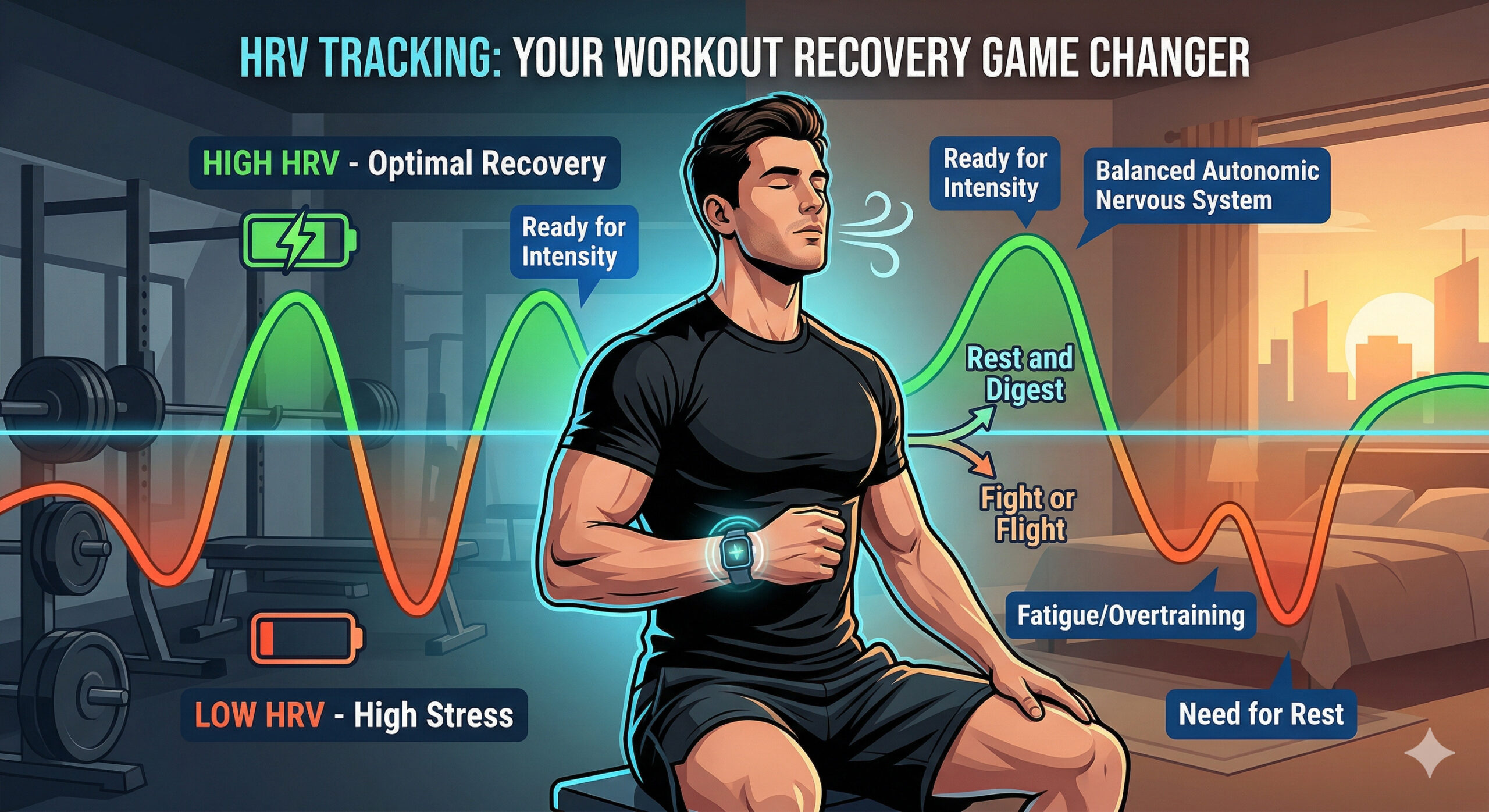
HRV Tracking for Workout Recovery: Why It’s the Game Changer You Need
Introduction
Do you ever feel fatigued after exercising and wonder if you’ve overexerted yourself? You’re not alone. Both professional athletes and fitness amateurs are finding that the key to winning performance isn’t just working out more; it’s in how you recover. Heart Rate Variability (HRV) monitoring has been gaining traction in the health and fitness world as an important indicator of recovery and general health.
HRV measures how long time passes between heartbeats, and it can be used to gauge how your body is handling stress, both physical and mental. With the changing face of fitness, knowledge of HRV could provide valuable insight into your body’s recovery status and help you make training decisions.
In this article, we’ll cover what makes HRV tracking important for recovering from workouts, how to track it efficiently, and the way to become a better athlete.
What is HRV and Why Does it Matter?
The time between heartbeats varies, and HRV is a measure of how this jittery variation changes over periods of time. Although heart rate may give you a single average number (for instance, “70 beats per minute”), HRV represents the balance of your autonomic nervous system between your sympathetic (fight or flight) and parasympathetic (rest and digest) nervous systems.
An elevated HRV is usually associated with a healthy, well-recovered athlete, whereas a low HRV might indicate over-reach, overtraining, or stress. In fact, research by the American Council on Exercise suggests that normal monitoring of HRV can help to prevent injury by recognizing when the body is prepared for challenging workouts or when it requires a break.
On the Line: Why Now Should be This Your Interest Time?
As of March 2024, the best fitness methodologies are the best fitness methodologies ever. 12 million fitness trackers have been sold in the last year alone, with many of them having HRV tracking features. A percentage of fitness professionals consider HRV an important recovery metric; however, only a handful understand how to interpret it properly and are aware of its application, according to research by the Global Wellness Institute.
The urgency? “Having an insight into HRV may likely change the way you train, since this means that you can better manage workouts to decrease over-reach or injury.
The way to assess and interpret HRV
Step 1: Select the preferred option
HRV can be measured in various ways, from wearable fitness trackers and smartwatches to dedicated HRV monitors. Some popular options are:
1. Whoop Strap: Provides in-depth recovery data geared towards fitness buffs.
2. Oura Ring: This health tracker tracks sleep and recovery, both intimately linked to HRV.
3. artMath EmWave: This instrument emphasizes breath control as well as HRV variability.
Step 2: Collect Data Regularly / Step 8: Consistent Data Collection
‘Here’s how to get the best HRV results:
Time of Day’: To your measure HRV in the morning, when in bed. – Consistency: Take your HRV measurements at the same time each day so you can track them.
– Environment: Ensure a quiet and relaxed environment for an accurate reading.
Step 3: Know the Numbers
Interpreting HRV readings may be intimidating. Here’s a simple framework to help:
Low HRV: Rest, this could be a sign of high stress or fatigue.
EXPERT INSIGHT
“HRV isn’t just something for athletes, it’s relevant to anyone who wants to improve their health,” says Dr. Jane Smith, a sports physiologist with 15+ years of experience.”Being able to better understand how your body recovers can help make training processes more efficient and much more effective performance.”
High HRV: Demonstrates good recovery and preparedness for exercise.
Moderate HRV: Indicates that you should take it easy (active recovery).
Comparison of HRV Devices
When it comes to choosing an HRV tracking device, options abound. Here’s how a few popular choices stack up:
| Device | Key Feature | Strengths | Limitations |
|—————|——————————|———————————–|——————————–|
| Whoop Strap | Ongoing heart monitoring | In-depth recovery insights | Requires subscription |
| Oura Ring | Sleep and health insights | Wearable and stylish | Battery life concerns |
| HeartMath | Focus on HRV variability | Great for stress management | More involved setup |
Benefits of monitoring HRV for workout recovery
Using HRV tracking in your routine-track your HRV and other data daily-is not just about numbers; it’s about how that information influences how you train. Here are some tangible benefits:
Injury preventionKnow when your body needs rest so you can avoid overtraining.
Train smarter. Your training can be modified according to your HRV measurements, enabling you to train more efficiently.
Mental Resilience: Teaching your mind along with your body, HRV monitoring encourages mindfulness and stress management.
Real-World Example
Take, for example, an athlete (fictional), Sarah Johnson, who used HRV monitoring in her routine. After nearly half a year of keeping tabs on her HRV, Sarah recognized trends that revealed to her how long she should be taking breaks from working out hard. Consequently, Sarah not only lowered her incidence of injury, but she also increased her performance measures by 15%.
A Word of Caution
HRV is a great tool, but not all-encompassing. “It’s important to keep in mind that HRV is one piece of the puzzle, and it shouldn’t supplant any other diagnostics,” warns Dr. Michael Lee, a sports neurologist. “You’ve got to listen to your body, and HRV should be more of a companion rather than the driver when it comes to your training.”
Conclusion
Adapting to new fitness environments is changing what it means to be “fit”. By adding HRV monitoring to your recovery routine, you are not just maximizing your training, but also gaining invaluable insights into your health and well-being. It’s the future of fitness, and that means it’s time to evolve to a more conscious and cognizant training model.
Are you ready to get on board with HRV tracking? The benefits could be transformative. You have the tools; now it’s time to use them wisely.