A Study of Maxine Greene’s Work on Arts in Education: Why “Wide-Awakeness” Still Matters in U.S. Schools
Why this question matters in the United States right now
Here’s the quick, data-backed reality: most U.S. public schools report offering at least one standalone arts class, but access varies sharply by discipline and context, and many schools report inadequate support conditions.
The National Endowment for the Arts summarized findings from the November 2024 School Pulse Panel (NCES) showing that 93% of U.S. public schools reported offering at least one standalone arts class during the school day. Music and visual arts were the most commonly offered, while theater/drama and dance appeared far less consistently across schools. The same report highlights resource gaps schools reporting limits in funding, facilities, and materials even when student interest exists. You can review the NEA’s full report here: Arts Education in U.S. Public Schools .
Why bring this up in an article about Maxine Greene?
Because Greene’s philosophy isn’t a feel-good slogan. It’s a diagnostic tool. When the arts become fragile when they depend on leftover budget, leftover time, leftover staff schools don’t just lose “creativity.” They lose a structured way to build attention, interpretation, empathy, and civic imagination.
And yes, that’s a big claim. Greene would stand by it.
If you’re building topical authority on your site, this is also where you can connect arts education to broader system design and reform. A relevant internal companion topic could be global education reform trends, especially if you cover how curriculum priorities shift under accountability pressures.
What Maxine Greene actually argued about the arts in education
Greene’s central move is both simple and disruptive: the arts change what students notice, and what students notice changes what they believe is possible.
In “Toward Wide-Awakeness,” Greene describes works of art as intentionally created to move people toward critical awareness and moral agency, and she argues they should be central to curriculum under the arts and humanities. That’s not an argument about decoration. It’s an argument about human development and democratic life. You can read the primary text here: Toward Wide-Awakeness.
So what’s “wide-awakeness,” in plain language?
It’s the opposite of autopilot. It’s learning with your eyes open. It’s the ability to encounter an experience an image, a story, a sound, a moment in history and ask, What am I seeing? What else could this mean? Who benefits from this version of reality? What could be different?
Greene’s point is that the arts train that stance. Not perfectly. Not automatically. But powerfully, because art demands interpretation. A worksheet doesn’t.
There’s also a practical dimension often missed in online summaries: Greene’s influence connected philosophy to classroom-facing arts education through institutional work associated with Lincoln Center education programming, which helped embed aesthetic education into real school partnerships. That institutional context is why she isn’t just cited in theory papers she’s referenced across arts education practice communities.
If you’re writing for AI engines and traditional search, it helps to anchor the key entities clearly: Maxine Greene, Teachers College (Columbia), Lincoln Center education work, aesthetic education, democratic schooling, imagination, moral agency. Those entities co-occur across much of the scholarly and practitioner discourse around Greene’s legacy.
What most “Maxine Greene and arts education” articles miss
A lot of top-ranking content about Greene lands in one of two traps.
One trap is floating in abstraction: imagination, freedom, meaning, democracy beautiful words that never touch the bell schedule.
The other trap is reducing Greene to a motivational poster: “arts are important.” Full stop.
What’s missing is the bridge: how Greene’s ideas explain the real U.S. access pattern in 2024–2025, and what a school can do that’s both philosophically faithful and operationally realistic.
The NEA’s longitudinal report, Snapshots of Arts Education in Childhood and Adolescence, helps here because it ties arts exposure across childhood to measured outcomes and participation patterns over time exactly the kind of “receipts” decision-makers look for.
At the same time, the Arts Education Partnership’s data-focused report, Arts Education Data and Reporting Initiatives, is blunt about a challenge Greene would recognize instantly: what schools track and report shapes what schools protect.
If you want a practical internal link for readers who care about funding logic and sustainability, this topic pairs naturally with foreign aid impact analysis, especially if you translate the “program fragility” concept from international development to district budgeting.
A professional, school-ready framework inspired by Greene
Greene didn’t publish a neat checklist. But her writing consistently returns to a few repeatable classroom conditions: encounter, interpretation, dialogue, and agency. Here’s a way to operationalize those conditions without turning the arts into another compliance routine.
Make room for a genuine aesthetic encounter
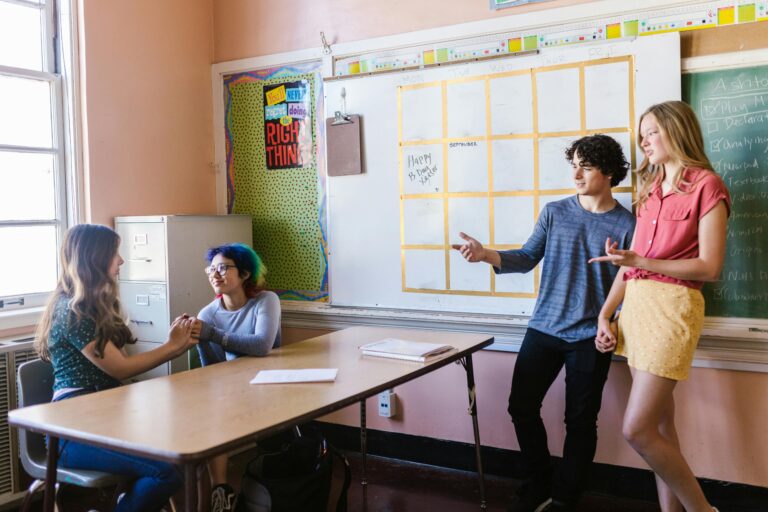
In too many classrooms, students meet art through someone else’s conclusion. They’re told what the poem means. They’re told what the painting represents. They’re told what the play is “about.”
A Greene-aligned approach flips that sequence. Students meet the work first, with time to notice and react before anyone supplies the “correct” reading.
This doesn’t require expensive programs. It requires protected minutes and teacher permission to let uncertainty exist.
Suggested image placement: a classroom “gallery walk” with student annotations.
Alt text: “Students observing visual art and writing interpretations as part of an aesthetic education lesson inspired by Maxine Greene.”
Treat interpretation as a civic skill, not a trick question
Interpretation can feel risky in school. Students worry about being wrong. Teachers worry about losing control. Administrators worry about “off-task.”
Greene’s argument makes this worry look backward: interpretation is how young people learn to live in a plural society. When students practice supporting interpretations with evidence what they notice, what in the work led them there they’re building habits of mind that transfer to civic life.
This is also where arts education becomes highly compatible with literacy goals without being reduced to “test prep.” A helpful internal bridge topic for that is literacy rate global comparison, especially if you discuss how literacy systems value meaning-making versus mere decoding.
Protect dialogue as instructional substance
Dialogue is often treated like a luxury. Greene treats it like a requirement.
Discussion is where students encounter difference, revise assumptions, and discover that meaning isn’t something handed down it’s something made in community. That is “wide-awakeness” at school scale.
A useful policy anchor for U.S. readers: the federal framing of a “well-rounded education” explicitly includes the arts, and federal funding streams can support access when leaders prioritize it. The Department of Education’s arts education resources page is a high-authority starting point: ED Arts Education Resources (AAEC / ed.gov).
End with agency, not appreciation
A lot of arts instruction ends at “I liked it” or “I didn’t like it.”
Greene’s work pushes beyond appreciation toward agency: after students see differently, what do they do with that new perception? Do they write, create, curate, perform, advocate, redesign?
Agency doesn’t have to be political in a partisan sense. It can be as simple as students creating a performance about belonging at school, curating a hallway exhibit on neighborhood history, or composing a piece that represents a community challenge.
This is where arts education stops being ornamental and becomes developmental.
What the current evidence says about arts education outcomes
Let’s address the question U.S. decision-makers always ask, sometimes with genuine curiosity and sometimes as a budget-defense move: Does arts education “work”?
The research landscape is mixed, mostly because “arts education” isn’t one thing. A weekly music class isn’t the same as a sustained theater program. A one-time assembly isn’t the same as a sequenced visual arts curriculum.
The NEA’s 2025 Snapshots report is useful because it synthesizes longitudinal datasets to examine access patterns and associations with outcomes and participation across childhood and adolescence.
If you need a policy-and-research “credibility anchor” that’s widely recognized in U.S. education discourse, RAND’s arts education topic hub offers an accessible overview of research and implementation themes without sounding like marketing copy.
Here’s the contrarian point that often gets lost: the strongest argument for arts education is not that it automatically boosts standardized test scores. The strongest argument is that it builds capacities schools claim to value attention, interpretation, empathy, communication, creativity, resilience—through a medium designed to evoke them.
Greene would likely say: if schooling teaches students to comply without imagining alternatives, it trains them for a narrow life. The arts widen that life.
Reading the 2024–2025 U.S. access picture through Greene’s lens
The NEA’s School Pulse Panel report shows broad availability, but also a discipline hierarchy: music and visual arts appear widely; dance and theater appear far less commonly; resource adequacy is not universal. NEA School Pulse Panel arts report
Greene helps you interpret what those patterns mean.
When arts access is inconsistent, students’ opportunities to practice interpretation and agency become inconsistent too. When arts courses are scarce in high-poverty contexts, it often signals that the system is prioritizing what is easiest to measure over what is most humanly necessary. That’s not an accusation. It’s a structural diagnosis.
If your readers want a deeper data infrastructure view how states and districts even track arts access the AEP report is one of the most operationally helpful documents available: AEP Arts Education Data and Reporting Initiatives.
And if you want to guide readers toward implementation strategy without overwhelming them, an internal “how we build sustainable education programs” post can fit well here. If you publish something like that, link it contextually; for now, a reasonable internal companion topic might be education content strategy to keep readers moving through your site.
What U.S. schools can do that’s both realistic and Greene-aligned
Most schools don’t need a revolution. They need protection.
They need protection from the quiet budget cuts that reduce programs to occasional exposure. They need protection from scheduling decisions that shrink arts minutes into leftovers. They need protection from staffing models that treat certified arts educators as optional.
Federal framing can support that protection when leaders choose to use it. The U.S. Department of Education’s arts education materials outline how programs can support well-rounded opportunities under federal initiatives and guidance. Start here: ED Arts Education Resources.
A Greene-aligned district plan typically emphasizes:
Reliable access across multiple disciplines
Not every school can offer everything, but systems can avoid the pattern where students only see the arts through one discipline and only in certain grades.
Protected instructional time
When arts time is constantly interrupted or treated as expendable, the learning outcomes become thin and the program looks “ineffective,” which becomes a self-fulfilling budget argument.
Teacher expertise and professional development
Arts instruction led by trained educators changes the classroom culture around interpretation, critique, and revision. It also changes equity.
Student voice and meaning-making
If students never get to interpret, create, revise, and share with authentic audiences, the arts become another compliance class. That’s precisely what Greene was resisting.